
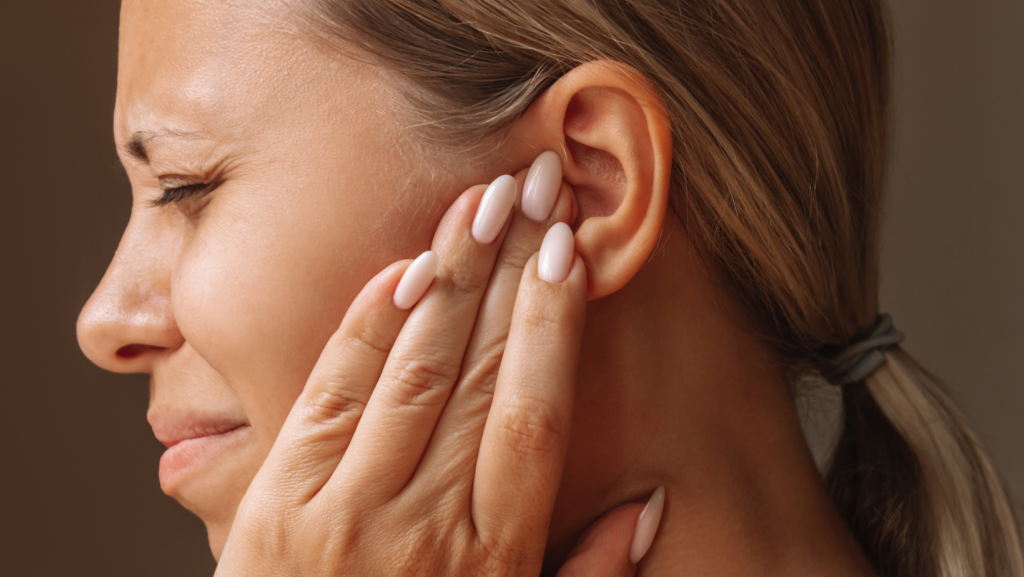
Tinnitus is more than an ear problem. Understanding the connections between hearing, the brain, stress, sleep, the jaw and neck—and the body as a whole—can open the door to more useful ways of managing it.
Tinnitus is the experience of hearing a sound that has no external source. It may be described as ringing, buzzing, humming, hissing, clicking or pulsing, and it may be heard in one ear, both ears or somewhere inside the head.
For some people, tinnitus is a mild background annoyance. For others, it becomes deeply disruptive, affecting sleep, concentration, mood, relationships and quality of life.
It is also remarkably common in Australia. Healthdirect Australia estimates that up to one in five people experience tinnitus at some point in their lives. A 2022 study of almost 5,000 working Australians found that 26.5% reported some form of tinnitus, including 6.9% who experienced it constantly. The study also highlighted the importance of occupational noise exposure and good hearing protection in Australian workplaces.
One of the challenges is that there is no single treatment that works for everyone. Tinnitus can have many contributing factors, and no medication has been proven to cure the condition. However, that doesn’t mean nothing can be done. Hearing care, sound therapy, cognitive behavioural therapy, treatment of underlying causes and support for sleep and stress can all play a role. Some people also explore acupuncture and Traditional Chinese Medicine as part of a broader, integrative plan.
Tinnitus Is More Than an Ear Symptom
Tinnitus often begins after hearing loss, exposure to loud noise, an ear infection, certain medications, or injury to the head or neck. Earwax, jaw dysfunction, Ménière’s disease and other medical conditions may also contribute.
Although the sound seems to come from the ears, current research suggests that persistent tinnitus also involves changes in the way the brain processes auditory information. When normal sound input is reduced or altered, the auditory system may become more sensitive—as though the brain has turned up its internal volume. Activity in brain networks involved in attention and emotion can also influence how noticeable or distressing the sound becomes.
This helps explain why tinnitus may feel louder or more intrusive during periods of stress, anxiety, poor sleep, emotional trauma or exhaustion. The sound is real, but the degree to which it dominates awareness can be shaped by the nervous system’s response to it.
For some people, a feedback loop develops:
- The brain notices the sound.
- The sound is interpreted as threatening or alarming.
- The stress response becomes activated.
- Attention returns repeatedly to the tinnitus.
- The sound feels even more intrusive.
Calming this cycle does not mean imagining the tinnitus away. It means helping the brain and body stop treating the sound as a constant danger signal.
When Tinnitus Should Be Medically Assessed
New or persistent tinnitus should be discussed with a GP, audiologist or ear, nose and throat (ENT) specialist so that treatable causes and hearing loss can be assessed. An Australian clinical review published by the Royal Australian College of General Practitioners recommends formal audiometric assessment for people presenting with tinnitus, as hearing loss is a common contributing factor.
Seek prompt medical advice if tinnitus:
- begins suddenly, particularly with sudden hearing loss;
- occurs only on one side;
- pulses in time with your heartbeat;
- follows a head or neck injury;
- is accompanied by marked dizziness, weakness, facial changes or other neurological symptoms; or
- is causing severe distress, anxiety, depression or thoughts of self-harm.
Acupuncture and other complementary approaches should support—not delay—appropriate medical and audiological investigation.
In Australia, you can call Healthdirect on 1800 022 222 for 24-hour health advice. If tinnitus is contributing to overwhelming distress or thoughts of self-harm, contact Lifeline on 13 11 14, Beyond Blue on 1300 22 4636, or call 000 if there is immediate danger.
A Traditional Chinese Medicine Perspective
Traditional Chinese Medicine does not treat tinnitus as one single pattern. Instead, treatment is guided by the nature of the sound, how and when it began, what makes it better or worse, and the person’s broader health picture.
In TCM theory, the ears are closely associated with the Kidney system, which relates to constitutional vitality, ageing and the nourishment of the brain and sensory organs. Chronic, lower-pitched tinnitus that becomes worse with fatigue or depletion may be understood as part of a Kidney deficiency pattern.
Sudden, loud or high-pitched tinnitus that flares with stress, frustration or overwork may be associated with Liver Yang rising or Liver Fire disturbing the upper body. This pattern may occur alongside headaches, irritability, insomnia, neck tension or a feeling of pressure.
Tinnitus accompanied by heaviness, congestion, dizziness, ear fullness or sluggish digestion may be viewed as Phlegm or Dampness obstructing the clear sensory pathways.
When tinnitus changes with jaw movement, posture, neck tension or muscular pressure, the pattern may involve Qi and Blood stagnation in the channels around the neck, jaw, scalp and ears. Biomedicine also recognises somatosensory tinnitus, in which sensory input from the jaw, head or neck can influence the tinnitus signal.
These patterns can overlap. A TCM assessment therefore considers the whole person rather than selecting a standard point prescription for the ears alone.
What Does the Research Say About Acupuncture?
Research into acupuncture for tinnitus is promising in some areas, but it remains mixed and inconclusive.
Some clinical trials and systematic reviews have reported improvements in measures such as the Tinnitus Handicap Inventory, perceived severity and quality of life. However, studies vary considerably in their design, acupuncture methods, control treatments and quality. Because of these limitations, clinical guidelines have generally concluded that there is not yet enough high-quality evidence to recommend acupuncture as a proven treatment for persistent tinnitus.
That distinction matters. Acupuncture should not be promoted as a guaranteed cure, but it may be a reasonable complementary option for some people—particularly when treatment also addresses stress, sleep disturbance, jaw tension, headaches, neck pain or muscular patterns that appear to aggravate the tinnitus.
In clinical practice, treatment may focus on:
- regulating nervous-system arousal;
- supporting sleep and emotional wellbeing;
- easing tension in the jaw, neck and scalp;
- addressing headaches, pain or digestive patterns that coexist with tinnitus; and
- reducing how intrusive and distressing the sound feels.
The most realistic goal is often not to make the sound vanish immediately. It may be to reduce its intensity or frequency, improve sleep, decrease emotional reactivity and help the person feel more resilient and in control.
The Importance of Sleep and Stress Regulation
Tinnitus and sleep can become a difficult cycle. The sound may interfere with sleep, while tiredness can make the sound harder to tolerate the following day. Stress and hypervigilance can further increase the brain’s attention to it.
From a TCM perspective, inadequate rest may deplete Yin and Blood and disturb the relationship between the Heart and Kidney systems, making it more difficult for the mind and senses to settle.
An integrative plan may therefore include:
- a consistent sleep and waking rhythm;
- gentle background sound at night rather than complete silence;
- meditation, breathing practices or progressive relaxation;
- Qi Gong, Tai Chi or gentle yoga;
- regular movement and time outdoors;
- counselling or cognitive behavioural therapy when tinnitus is creating significant distress; and
- reducing the habit of repeatedly checking or rating the sound.
Even when tinnitus remains audible, reducing fear and vigilance can make it far less dominant.
Building a Broader Integrative Plan
Successful tinnitus management often requires several approaches working together.
1. Check hearing and underlying causes
A hearing assessment can identify hearing loss, while your GP or specialist can investigate earwax, infection, medication effects, cardiovascular factors and other possible contributors. Properly fitted hearing aids can make tinnitus less noticeable for people who also have hearing loss. In Australia, your GP can refer you to an audiologist or ENT specialist when further investigation is needed.
2. Protect your hearing—sensibly
Use appropriate hearing protection around genuinely loud sound, including machinery, power tools and amplified music. At the same time, wearing earplugs constantly in normal, safe environments may make internal sounds more noticeable. An audiologist can offer individual guidance.
3. Consider the jaw and neck
If the sound changes when you clench your teeth, move your jaw, turn your neck or alter your posture, assessment by an appropriately qualified dentist, physiotherapist or other practitioner may be useful. Acupuncture may also be incorporated to address related muscular tension and pain.
4. Use sound therapeutically
Soft music, nature sounds, a fan or a sound generator may reduce the contrast between tinnitus and silence. Sound therapy is usually used to make tinnitus less intrusive rather than drown it out completely.
5. Identify your own triggers
Some people notice temporary changes after alcohol, caffeine, high-salt foods, stress or poor sleep, but triggers are not universal. Rather than following an unnecessarily restrictive diet, keep a simple symptom diary and look for a consistent personal pattern.
6. Be cautious with supplements
Magnesium, vitamin B12, vitamin D, coenzyme Q10 and ginkgo biloba are sometimes marketed for tinnitus, but supplements have not been proven to treat persistent tinnitus in the general population. Testing and correcting a genuine deficiency may be appropriate, but supplements and herbs can interact with medications and are not automatically safe. Discuss them with a qualified healthcare professional before starting them.
Helping the Whole Person, Not Just the Sound
From a Traditional Chinese Medicine perspective, tinnitus is not simply something to suppress. It may reflect a more complex relationship among hearing, constitutional health, circulation, muscular tension, emotional strain, sleep and the nervous system’s capacity to move between activity and rest.
When sleep improves, the body is less tense, stress is better regulated and the brain no longer treats the sound as an immediate threat, many people find that tinnitus becomes less intrusive—even when it has not disappeared completely.
There is no universal solution, and no responsible practitioner should promise a cure. But a thoughtful, multidisciplinary approach can offer something very important: practical ways to reduce distress, improve quality of life and help you feel more at home in your body again.
For Australian information and peer support, Tinnitus Awareness at Soundfair—formerly Tinnitus Australia—provides resources and links to tinnitus support services.
About the Author
Dr Nicky Macdonald (TCM) is a registered acupuncturist and Chinese medicine practitioner with more than 26 years of clinical experience. Her work integrates acupuncture, Traditional Chinese Medicine and nervous-system-informed care to support the whole person.
Important Information
The information in this article is general in nature and is not intended to replace medical advice, diagnosis or treatment. Tinnitus can occasionally be associated with an underlying medical condition. Speak with your GP, audiologist or ear, nose and throat specialist for appropriate assessment, and consult a qualified healthcare professional before taking medicines, herbs or nutritional supplements or beginning a new health regimen.
Sources and Further Reading
- Healthdirect Australia: Tinnitus—causes, symptoms and treatments
- Royal Australian College of General Practitioners: A Review of Tinnitus
- Lewkowski K, et al. The prevalence of tinnitus in the Australian working population. Medical Journal of Australia. 2022;216(4):189–193
- National Institute on Deafness and Other Communication Disorders: Tinnitus
- Better Health Channel: Tinnitus
- Tinnitus Awareness at Soundfair: Australian information and support
- American Academy of Otolaryngology—Head and Neck Surgery Foundation: Clinical Practice Guideline—Tinnitus
- Huang K, et al. Acupuncture for tinnitus: a systematic review and meta-analysis of randomised controlled trials. Acupuncture in Medicine. 2021;39(4):264–271