
Medicine Can Support HBy Dr Nicky MacDonald – HealthConnectSHEN
Recently, I experienced shingles myself. Like many people, I had previously treated patients with this
condition, but experiencing it personally gave me an even deeper appreciation for how uncomfortable and
disruptive it can be. The burning nerve pain, itching, and fatigue can be intense, and it reminded me how
valuable acupuncture and Chinese herbal medicine can be in supporting the body through viral conditions
such as shingles.
What Is Shingles?
Shingles is caused by the Varicella Zoster virus, the same virus responsible for chickenpox. After a person
recovers from chickenpox, the virus remains dormant in the nervous system and may reactivate later in
life. When it reactivates, it travels along nerve pathways and produces a painful rash or blistering eruption,
typically affecting one side of the body.
- Burning or stabbing nerve pain
- Tingling or itching sensation
- A red rash followed by fluid–filled blisters
- Sensitivity of the skin
- Fatigue or flu–like symptoms
Why Does Shingles Occur?
Shingles often appears when the immune system is under pressure. Stress, fatigue, illness, hormonal
change, or age–related immune decline can all contribute to viral reactivation. In Traditional Chinese
Medicine (TCM), shingles is often associated with Damp Heat or Toxic Heat affecting the Liver and
Gallbladder channels.
How Acupuncture Can Help
Acupuncture can be highly effective for shingles, particularly when treatment begins early. Treatment
focuses on clearing heat, relieving nerve pain, reducing inflammation, supporting the immune system, and
promoting faster healing of the skin.
Chinese Herbal Medicine
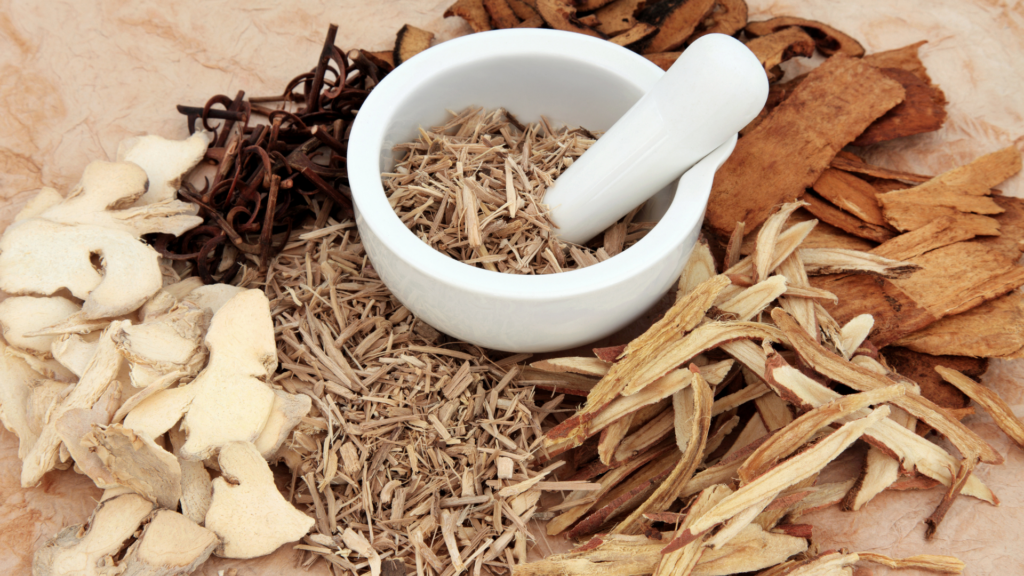
Chinese herbal medicine is often used alongside acupuncture. Herbal formulas are tailored to the
individual and may help clear heat and viral toxicity, reduce inflammation, support immune function, and
promote skin healing.
Preventing Post–Herpetic Neuralgia
One of the most difficult complications of shingles is post–herpetic neuralgia, where nerve pain persists
long after the rash resolves. Acupuncture can help calm irritated nerves, improve circulation, and support
long–term nerve recovery.
TCM Practitioner Notes
Common Pattern: Liver & Gallbladder Damp Heat
Typical presentation includes burning rib–side pain, red blistering rash, irritability, thirst, and dark urine.
Treatment focuses on clearing heat and resolving toxicity.
Modified Long Dan Xie Gan Tang
- Long Dan Cao
- Huang Qin
- Zhi Zi
- Chai Hu
- Sheng Di Huang
- Dang Gui
- Ze Xie
- Mu Tong
- Gan Cao
- Additions: Jin Yin Hua, Lian Qiao, Ban Lan Gen, Zi Cao
Pattern: Toxic Heat
- Modified Huang Lian Jie Du Tang
- Pu Ji Xiao Du Yin
- Ban Lan Gen
- Da Qing Ye
- Zi Cao
- Mu Dan Pi
Pattern: Qi & Blood Stagnation (Post-Herpetic Neuralgia)
- Modified Xue Fu Zhu Yu Tang
- Yan Hu Suo
- Chuan Lian Zi
- Ru Xiang
- Mo Yao
Common Acupuncture Points
LI4 (He Gu) – moves Qi and clears heat
- LI11 (Qu Chi) – clears heat and inflammation
- LV3 (Tai Chong) – regulates Liver Qi
- GB34 (Yang Ling Quan) – benefits rib and flank pain
- SJ6 (Zhi Gou) – moves Shaoyang channel Qi
- SP10 (Xue Hai) – cools blood
- ST36 (Zu San Li) – supports immune function
- BL17 (Ge Shu) – moves blood
- GB41 (Zu Lin Qi) – clears channel heat